
Would You Hire Yourself Over ChatGPT?


The modern world is evolving faster than any training program or government strategy can keep up with. AI is transforming job roles in real time. The climate crisis is driving the creation of entirely new industries. And our education systems are trying to catch up.
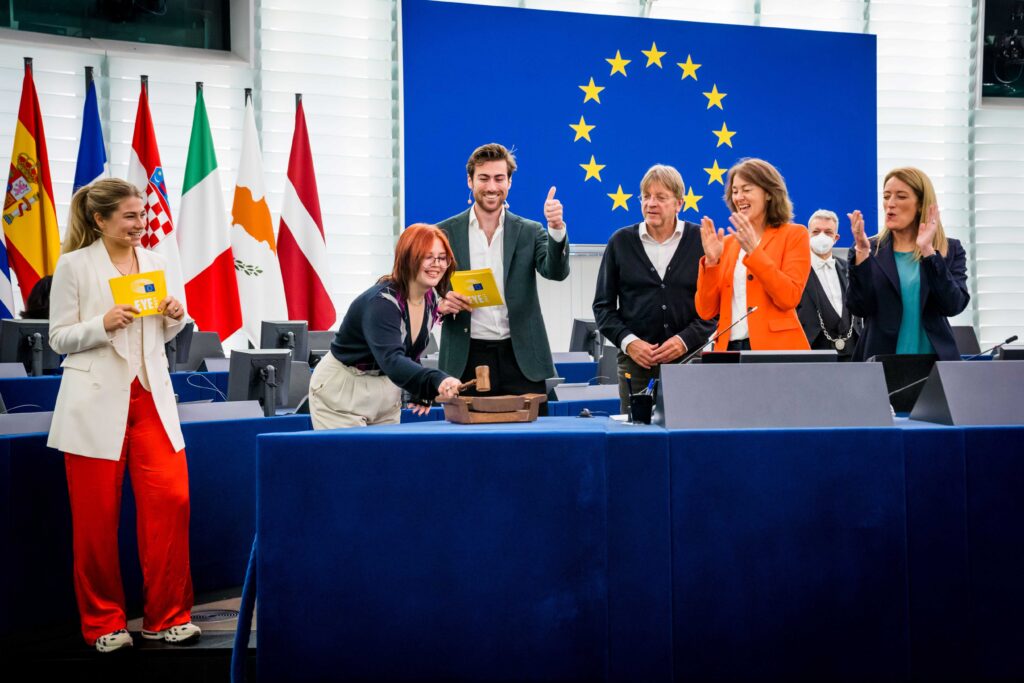
The Symbiosis Foundation engaged with the European Youth Event 2025 in Strasbourg through its virtual platform, joining researchers, policymakers, and youth representatives for the session “Skills of Tomorrow: Are We Ready for Future Challenges?”.
Here are some insights that may benefit you.
1. The Skills Shift Is Already Here
Overall, 30% of the skills required in jobs today didn’t exist three years ago, according to Elena Magrini, Head of Research at Lightcast.
The rules of the game are changing faster than we can write them down. Even familiar roles now come with radically different expectations. Healthcare practitioners rely on advanced software for increasingly sophisticated equipment. Data analysts must become fluent in emerging AI tools.
If we want to thrive, we need to let go of the idea of “finished” learning. Education can’t end at graduation.
“The pace of change is faster than anything we’ve seen before. If we treat education as a one-time investment, we’re already behind.” — Elena Magrini
🔹 What You Can Do
- Start thinking of learning as a lifelong rhythm. Balance work with development. Stay curious (beginner’s mindset), and find ways to apply new knowledge through measurable adaptation.
2. What Makes Us Human Is Our Sustainable Advantage
We’re surrounded by tools that are faster, cheaper, and more accurate than us. Machines can write, calculate, even design. But they can’t do everything.
“AI is powerful, but it doesn’t know what it means to be human. It doesn’t feel responsibility. It doesn’t build trust.” — Perttu Pölönen, futurist and author of Future Skills
The jobs of the future will demand more of our humanity, not less:
- Leading with empathy and making ethical decisions
- Communicating across cultures and navigating conflict
- Working with purpose and vision, not just productivity
They’re your survival skills in the age of automation.

🔹 What You Can Do
- Reflect: What makes you valuable beyond your technical knowledge? That’s your human advantage.
- Join projects or communities where people skills matter – ones that challenge you to lead, collaborate, or resolve conflicts. Practice active listening, empathy, and emotional awareness.
3. Education Needs a Redesign – Not Just an Update
Young people want education that prepares them for the future – not policies from 20 years ago. They want to co-design systems that bridge school and work, and connect policy with practice.
Today, success in the labour market depends as much on your network, adaptability, and experience as on your degree. Your next opportunity might come from a mentor, a volunteer project, or a community initiative – not your diploma.
To use an example close to home: The Symbiosis Foundation is designing a framework that connects all of this. We’re building a global platform where people learn, grow, and solve challenges together.
🔹 What You Can Do
- Join or build a diverse network that keeps you informed, inspired, and ready to adapt.
- Don’t wait for formal permission – start projects that blend learning with doing. Also, support others navigating unconventional paths that align experiential learning with real-world needs.
4. Redefining How We Think About the Future
It’s no longer about certainty backed by rigid long-term plans. It’s about readiness: being adaptable, curious, and open to change.
Experience from 10 years ago might no longer be relevant unless you’ve updated your knowledge and adapted your methods.
The most powerful tool you can offer others is trust – by being curious, capable, and connected. You must be ready no matter how the world changes. Keep focusing on what matters most, and how you can contribute effectively.
“We don’t need another 10-year roadmap. We need a dream bold enough to move with the world.” — Perttu Pölönen
🔹 What You Can Do
- Build trust by being curious, capable, and connected – with a clear focus on what matters most and how to contribute effectively.
- Stay open to non-linear paths that align with your vision. Adopt a beginner’s mindset in new situations and surround yourself with people who believe in action, not perfection.
Join Us: Let’s Build the Future That’s Worth Living In
At The Symbiosis Foundation, we believe that learning is most powerful when it’s:
- Collaborative and Action-driven
- Open to all and rooted in humanity
We’re here to connect changemakers – students, volunteers, educators, professionals, organizations – so we can all grow, adapt, and share the tools that make impact possible.
If you’re thinking about the future of learning, working, or thriving – you’re already with us.
🔗 Follow The Symbiosis Foundation
🤝 Collaborate with us if you’re building something bold
The future doesn’t wait for us to feel ready. It belongs to those willing to learn, lead, and dream forward. If that sounds like you, let’s build it – together.
#FutureOfWork #SkillsOfTomorrow #LifelongLearning #HumanSkills #EducationReform #YouthVoices #SymbiosisFoundation #AI #PurposeDriven #EYE2025 #Adaptability #Collaboration



Responses