
Why We Started Symbiosis: Unlocking the Power of Collaboration to Drive Greater Impact

Five months ago, we launched The Symbiosis Foundation with a bold vision: to break down barriers and create a global ecosystem where organizations and volunteers collaborate for meaningful change. History has shown that the greatest breakthroughs—whether in science, technology, or social progress—come from collective effort. Yet, many changemakers still struggle to collaborate effectively due to competition, siloed approaches, and structural barriers.
Why Collaboration is the Key to Impact
The need for collaboration has never been more urgent. Let’s look at a few pivotal moments that demonstrate what’s possible when people and organizations unite with a shared purpose:
- The COVID-19 Vaccine Breakthrough (2020): A global crisis led to unprecedented cooperation between scientists, governments, and companies, producing a vaccine in months instead of decades (The Lancet, 2021).
- The James Webb Space Telescope (2022): Decades of international collaboration between NASA, ESA, and CSA resulted in a technological marvel that expanded our understanding of the universe (NASA, 2022).
- The Mectizan Donation Program: A cross-sector effort that has provided over 4 billion free treatments for river blindness and lymphatic filariasis, proving that long-term partnerships save lives (WHO, 2023).
These examples highlight what’s possible when we work together. Yet, despite these successes, many organizations still face barriers to collaboration. According to the Stanford Social Innovation Review, the very same silos and competition for resources that exist in many mission-driven organizations are limiting their potential for large-scale change (2022). What if collaboration weren’t the exception, but the rule?
Symbiosis: A New Way to Drive Change
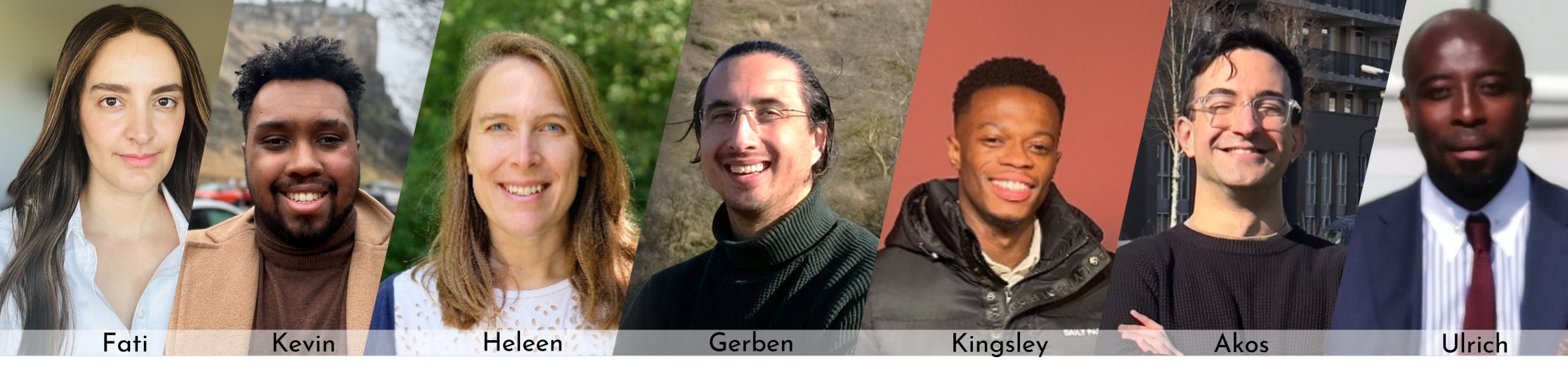
This challenge is why we started The Symbiosis Foundation . We knew that to make a real difference, we needed to create a trust-driven ecosystem where changemakers, nonprofits, and businesses could align their efforts, share resources, and amplify their impact. Instead of working in isolation, we enable people and organizations to:
- Find aligned partners to co-create impactful solutions.
- Share knowledge, expertise, and resources to overcome constraints.
- Foster cross-sector collaboration to tackle global challenges more effectively.
What This Means for You
Whether you’re an individual, a nonprofit, or a business, the question isn’t whether you can make an impact—it’s how much more you can achieve by collaborating. Studies show that:
- Cross-sector partnerships can improve efficiency by up to 40% in addressing social challenges.
- Shared knowledge networks accelerate innovation by reducing redundant efforts.
- Diverse teams consistently outperform isolated experts when solving complex problems.
How You Can Get Involved
The Symbiosis Foundation is a growing movement. If you believe in the power of collaboration to create lasting change, here’s how you can join us:
- Are you a changemaker looking for partners?
- Does your organization want to scale its impact?
- Do you believe collaboration is key to solving the world’s challenges?
Join the movement. Together, let’s make collaboration the new standard for impact. Reach out, explore our work, and become part of a community that’s amplifying its collective efforts to tackle the world’s biggest challenges.
Why It Works
The success of Symbiosis is grounded in evidence-based practices for cross-sector collaboration:
- Harvard Business Review highlights that collaborative intelligence can transform isolated efforts into cohesive interactions, improving resource efficiency.[1]
- Stanford Social Innovation Review stresses the importance of systemic collaboration to drive effective social change, leveraging diverse strengths for sustainable solutions.[2,3]
- World Economic Forum points to mission-based ecosystems as a way to foster collective accountability and break traditional organizational boundaries.[4]
- By forming structured partnerships among nonprofits, volunteers, and organizations, The Symbiosis Foundation creates a collaborative environment that drives sustainable, measurable change.[5,6]
Let’s make collaboration the new norm. Together, we can achieve more.
Symbiosis, Connecting People, Amplifying Good.
References
[1] Harvard Business Review: Collaborative Intelligence
[2] Stanford Social Innovation Review: Collective Impact
[3] Stanford Social Innovation Review: Cross-Sector Collaboration
[4] World Economic Forum: Mission-Based Ecosystems
[5] The Symbiosis Foundation
[6] Year Report 2024 – The Symbiosis Foundation



Responses